Cookies Consent

Thursday, January 3, 2019

Retroactively: Milan, Italy, May 22-25, 2018

It's time to finally finish this blog.  Our 6 months in Europe wouldn't be complete without some pictures from our trip in May 2018 to Italy.


We left at 8:46 by train from Mannheim for Milan, 


where we arrived punctually at 15:35 at the grandiose train station.

See the needle with colorful thread - Milan's image as the fashion capital of Italy!


After walking three blocks to our Airbnb we took off for the Brera Museum.


Within an hour of arrival we were surrounded by Caravaggio paintings and many more...!


 Following our museum visit we strolled through some of downtown Milan.


We slept well and kept cheese and yogurt on our outside window ledge.  We got up early to join our bus tour.  We needed to walk a ways and take a bus to the meeting point.


We'd walked 1.5 blocks when my trusty, old New Balance sneaker fell apart!  This center piece came loose and with that the shoe no longer held together.  What to do?  We ran back and I changed shoes. Jack gets all the credit for talking me into taking a second pair!  And running at breakneck speed we still made our bus.

 We chose the bus tour so that we would be guaranteed quick entrance to see Leonardo DaVinci's "Last Supper" fresco (1494)

We are fortunate to have seen it in person since the picture has been degrading almost since it was painted.  DaVinci experimented with a different "dry" method, rather than the traditional true fresco technique.  The last restoration was in 1999.  It really is a masterpiece!


 20 persons at a time were allowed 15 minutes in this room and it wasn't a second too long!


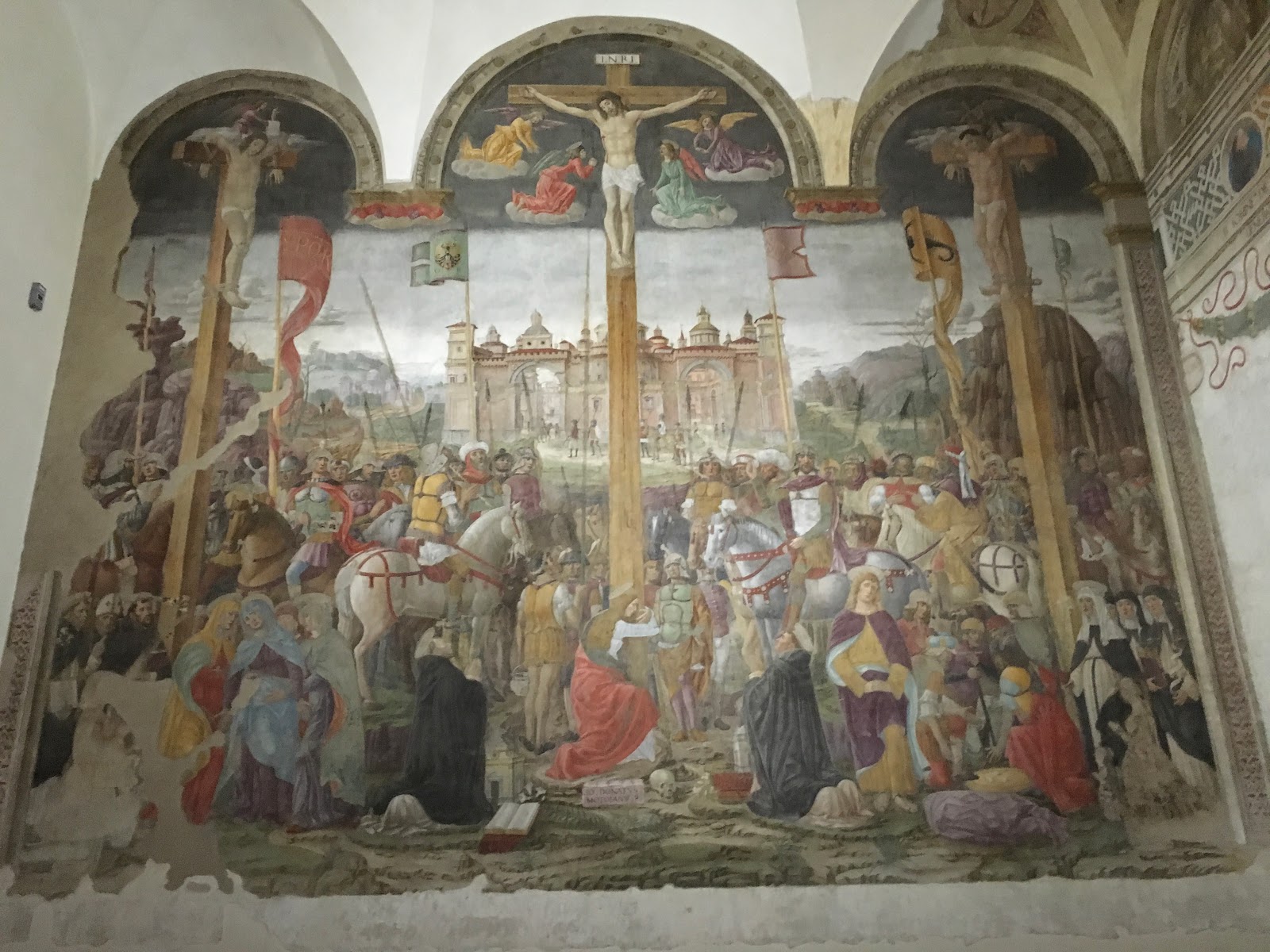
Across from the "Last Supper" is the "Crucifixion" by Montorfano (1495) and it serves to highlight the unique qualities of Leonardo DaVinci's work.


 The tour continued to the Milan Cathedral called Duomo, but the lines were too long even for our registered tour to get in!  So the tour group continued to La Scala opera house.


Inside La Scala we saw historical musical instruments, busts and paintings of famous musicians and composers, as well as the opulent concert hall.


We continued our own tour on foot to Basilica di Sant' Ambrogio.


Below was a crypt like in most churches, but this one


had the skeletons of martyrs that Ambrose dug up before he built his church in 380 A.D.!


As soon as the ticket office opened the following day we were ready to buy not only a ticket for the Duomo, but also to climb to its roof top and for visit the Duomo Museum.  All well worth it!


It was exhilarating being up so high and so close to all the ornate carvings.  We spent a long time exploring the roof.


Every part of it is different and worth the climb.  On the left of Jack you can see scaffolding where they were cleaning and repairing that section.


We took the subway to Sforza Castle (Castello Sforzesco) and walked around it and its beautifully maintained park and grounds.


The next day we were right back and toured the inside. The castle houses many kinds of museums. Here Jack is admiring Michelangelo's 4th Pieta called the Pieta Rondanini, 


Michelangelo died while working on this statue.


  Sometimes moving from one museum to the other involved outside stairs of this immense fortress.


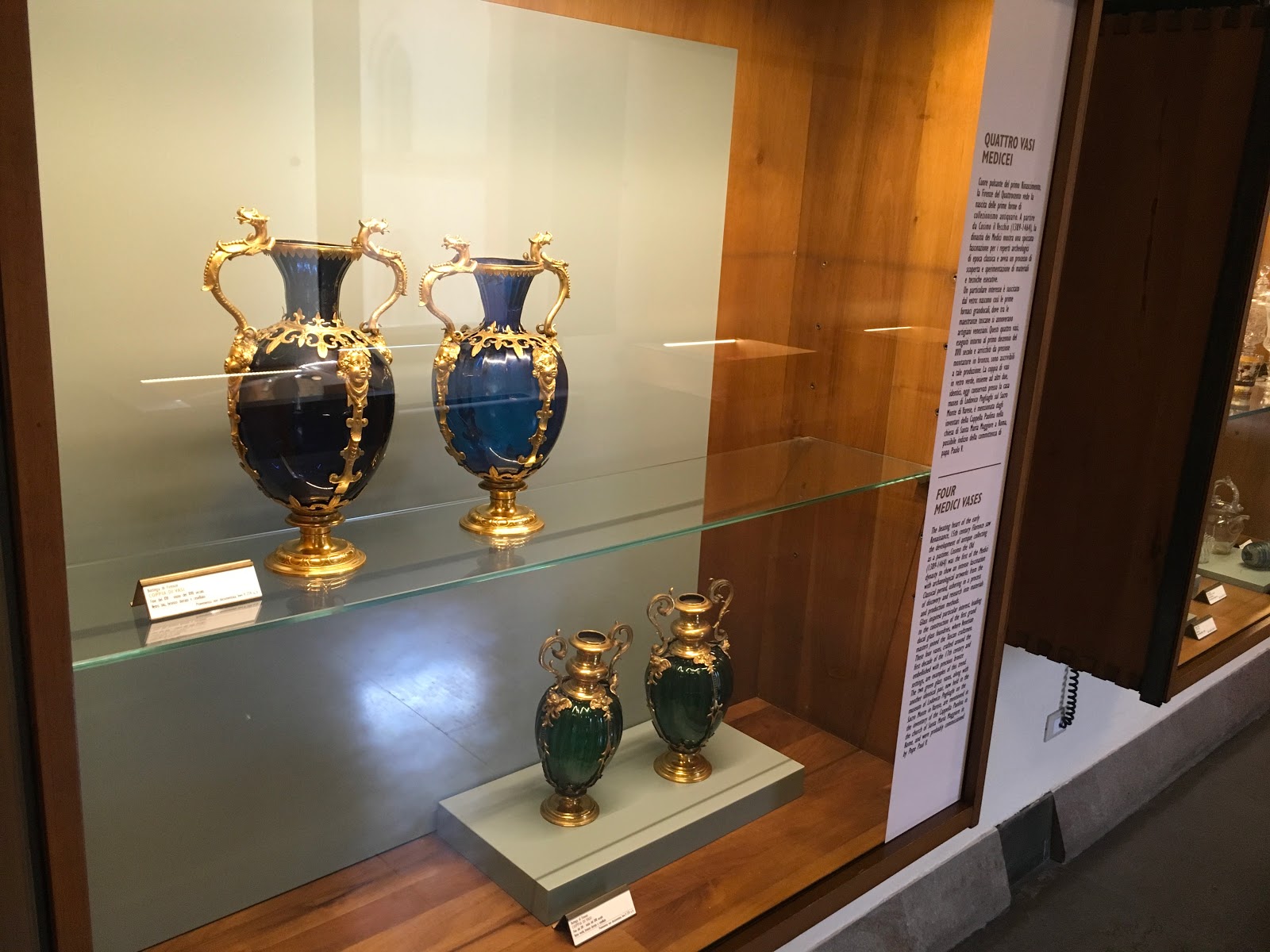
Four famous Medici vases!
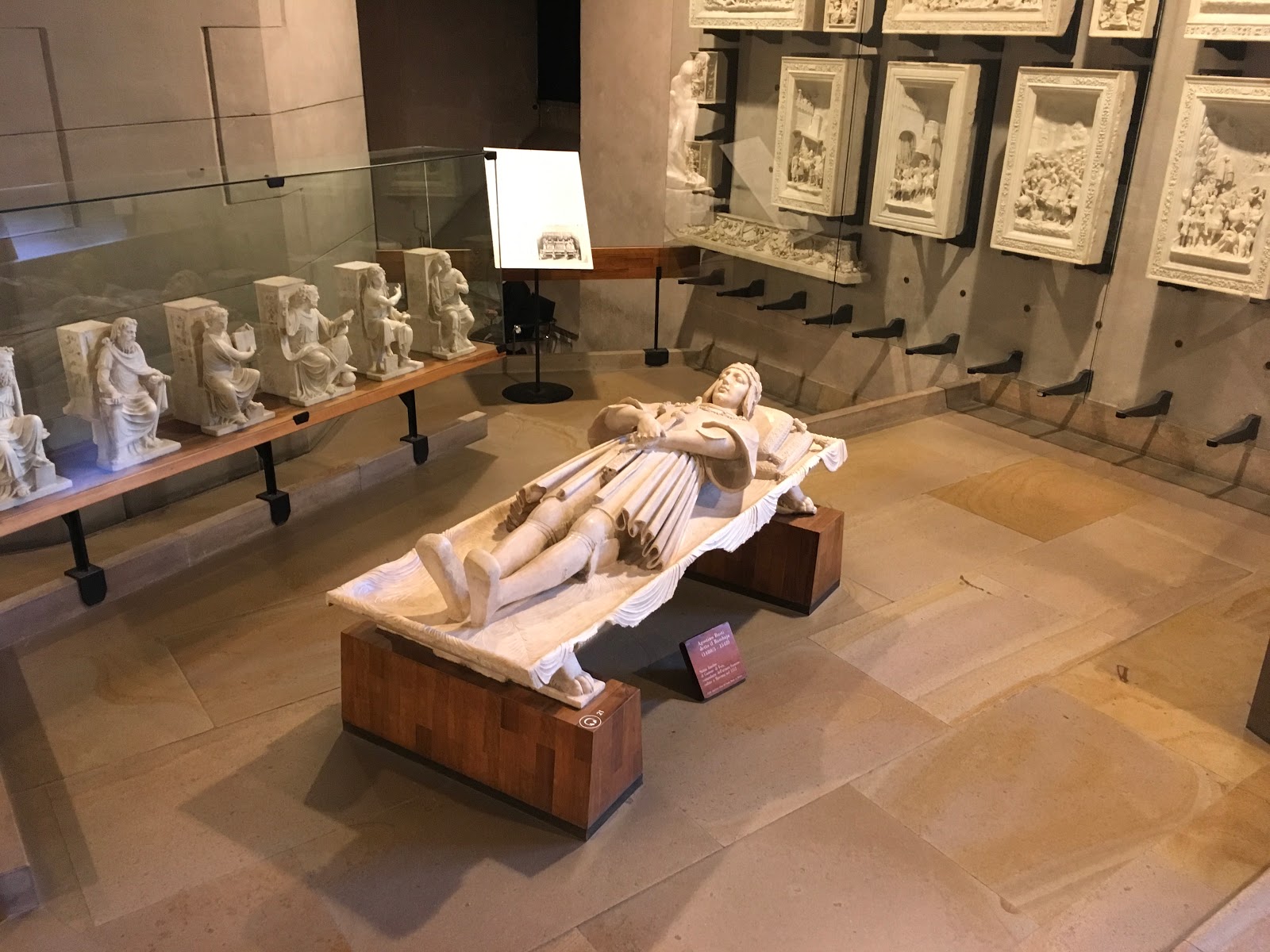


14th C memorial equestrian statue


After hours of walking through Sforza 


we rewarded ourselves with a quiet dinner by the canal in Navigli.


On Friday, May 25, 2018 we just had time for a few hours in the Monumental Cemetery.  Every tomb has different headstones or sculptures.  Simply amazing!


This worker was just replacing the lilies as he does every week in this modern tomb.


Most are not as large as this one, which is a very wealthy family's plot.


Most of the few people we encountered that morning were tending the graves of their loved ones.


Then we rushed back to the great subway system, picked up our bags at our room, and took the train to Cinque Terre.

Friday, June 29, 2018

Traveling to Trier

Trier is the oldest city in Germany, started by the Celts.  It's the largest Roman city north of the Alps and already had this claim to fame in 400 AD when it had 50,000 inhabitants.


This 25,000 seat Ampitheater, like most of the ancient walls and buildings was used as a quarry to build churches and  houses in the Middle Ages.


But underneath one can still see where the entertainers and their props stayed before they popped up.  They even used counter-weighted hoists to quickly appear and disappear.


Now there is a lot of accumulated ground water here.


In the surrounding walls one can imagine where they sold food and trinkets.


Eventually all the stone seats were removed and the hillsides became vinyards!


The Porta Nigra is the symbol of the city, one of the four huge gates that led into this walled Roman city.  The wall was 4 miles long, and like all Roman buildings used no mortar - only iron pegs to hold the huge sandstone blocks together!


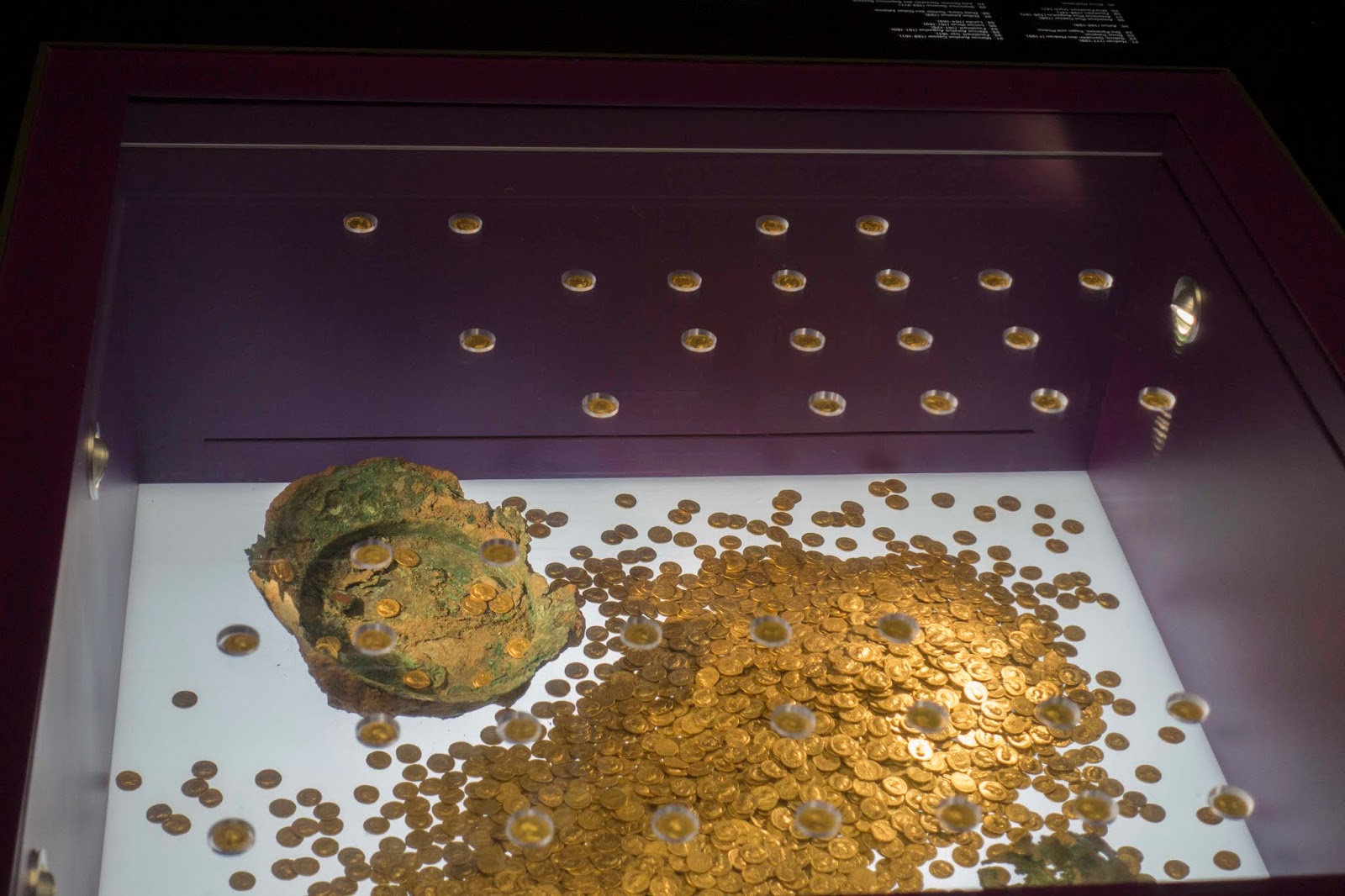
The archeological museum is a treasure!  Literally....


In 1993 a construction worker broke this ancient container and saw gold Roman coins pour out!


 This very busy bridge across the Mosel river still stands on Roman stone columns!


The cathedral is impressive and has undergone many additions and changes through the centuries.


The relics in these European cathedrals are always interesting, if unbelievable.  Here lies the garment Christ wore.  It is kept in a bejeweled golden container, which is opened once a year, but serves as the center focus behind the altar every day.


We can't count how many churches we've visited in these 6 months.  Everyone has been different and offered a moment of reflection.

Beside the Dom (cathedral) is the Basilica, a huge building, which was the imperial throne room for Constantin and today a Lutheran church.


 The wooden ceiling blocks are 10ft square and are the exact relicas since the original ceiling and roof burned in WWII.  Now the ceiling is supported by steel girders, but the original Roman ceiling was made of only wood!  


Behind this archbishop's residence you see the Basilica.  In the 12th C he attached his palace to it using the nave as a courtyard and the asp as a 5 story palace.  All that was destroyed in WWII and what was left were the original Roman walls!


 It seemed like wherever we walked in Trier we encountered more Roman ruins.


We accidently got off at a wrong bus stop and discovered the Barbara Baths, a huge complex of Roman bathing, which one can view by walking on a boardwalk above the ruins.  Immense!


Trier is not only known as a Roman city, but also as the birthplace of Karl Marx.  He lived here until he was finished with high school.  


The Chinese gave the city a Karl Marx statue this year in honor of the 200 year celebration.


Ask us to see more fascinating pictures of Trier.  Here we are at our Airbnb having a picnic outside.  Wonderful trip!